
Microsoft Word document [28.2 KB]

Microsoft Power Point presentation [3.1 MB]
Third Temple: A Work in Progress
Revelation 11:1
The first temple, built by King Solomon, existed beginning about 3,000 years ago. It was destroyed after nearly 4 centuries. The second temple was built under the leadership of Zerubbabel, with the support of the prophets Haggai and Zechariah, and with the authorization of the Persian king Cyrus the Great. It existed about 2,500 years ago, and then was renovated by Herod the Great a little over 2,000 years ago. It existed for less than a century.
So the first temple began existing 3,000 years ago, and the second temple began existing 2,500 years ago. Well, the third temple has not been built yet. But it does exist. It has existed for about 2,600 years in one place: Bible prophecy. In 572 BC God gave Ezekiel a vision of that temple [chapters 40-48]. A few decades later Daniel gives more details about it. So before the second temple existed, the third one did, in prophecy. And it will sit atop the temple mount during the first half of the tribulation. [read text] We don’t know exactly when it will be completed. When will the work begin? I want you to consider that the work has likely already begun.
The Temple Institute in Jerusalem is tasked with making preparations, and their progress is greatly accelerating.
The Sacred Vessels
Inside the Temple Institute's exhibition hall in the Jewish quarter of Jerusalem's old city, behind glass cases, but ready for removal at any time are the objects that will furnish the third temple. Not replicas, not museum pieces, not symbolic displays for tourists. They are functional sacred vessels built to exact biblical specifications from original source materials, gold, copper, silver, wood, for one purpose, to be used in the service of the third temple, the golden menorah or candlesticks, the seven branched candalabra described in Exodus 25, made of pure gold, weighing approximately 100 pounds, valued at several million dollars. It sits in a case overlooking the western wall plaza, positioned so that it faces the temple mount, the place it was built to stand. The golden incense altar is there, wood overlaid with pure gold, built to the exact dimensions prescribed in Exodus 30, with four golden horns protruding from its corners and a golden wreath representing the crown of the priesthood. The table of the showbread is there, gold overlaid, designed to hold the 12 loaves that Leviticus 24 describes being placed before the Lord each Sabbath. But those are just the three central vessels. The institute has created over 60 sacred items in total, including silver trumpets for public prayer, lyres and harps for the Levitical choir.
All of these items are fit and ready for use in the service of the Holy Temple. They are not waiting to be built. They are waiting to be placed. But the vessels are just the furniture. What about the people who would use them?
The Priestly Garments
Exodus 28 describes them with a specificity that leaves no room for improvisation. Every thread, every color, every stone, every measurement prescribed by God to Moses on Mount Sinai. Over 600 meters of pure gold thread has been prepared for the high priest's breastplate alone. Each string in the garment is composed of 28 individual threads. But there’s a certain dye, the sky blue color that God commanded for the priestly garments, and it has been lost to history for over 1,500 years. The specific species of sea snail that produces it was only recently identified, tested, and finally verified by researchers off the coast of Israel. It had vanished from human knowledge for 15 centuries, recovered from the Mediterranean Sea, processed according to ancient methods, and woven into garments that are hanging in Jerusalem right now. His entire outfit is ready, including the crown like band for his forehead, which says “Holy to the Lord”. Garments for the regular priests, white linen tunics, sashes, turbans, are all completed.
Altar Stones
In 2010, Temple Institute representatives went to the Dead Sea to collect something that has been waiting there for thousands of years. They are the stones that will form the altar of the third temple. But these are not just any stones. They are stones that have never been touched by a metal tool. They were formed by natural geological processes, shaped by wind, water, and time, and collected by hand. Deuteronomy is specific about what kind of stones can be used for the altar. They were transported to Jerusalem where a scaled down, transportable stone altar has been constructed, ready for assembly and placement on the temple mount.
What about the people who will serve at the altar? What about the priests who will offer the sacrifices?
300+ Priests
They are not actors. They are verified descendants of Aaron, the brother of Moses, the bloodline that God designated for priestly service over 3,000 years ago. How do you verify a bloodline that stretches back three millennia? Until recently you could not. Titus destroyed all the records in 70 AD. The answer: DNA testing--Genealogical research tracing the Y chromosome markers that are passed from father to son through the priestly lineage.
Over 300 men with verified lineage are now undergoing rigorous training programs operated by the temple institute and affiliated organizations. The training covers every dimension of temple service, animal sacrifice procedures, how to select, inspect, slaughter, and prepare the offering according to Levitical law. Ritual purification protocols. The precise sequence of washings and preparations required before a priest can serve at the altar. This training includes the specific movements, positions, and prayers that accompany every offering.
During a recent Passover, the priests in training performed an authentic reenactment of the Passover offering, using sacred vessels, wearing priestly garments, following the exact sequence described in the Torah. This was the first time the Passover offering has been rehearsed by verified priests using consecrated vessels in over 2,000 years. But priests are just personnel. They need more than training. They need purification. And purification requires something that has not existed on the earth for over two millennia. Something so rare, so specific, so impossible to produce that its absence has been the single greatest obstacle to the resumption of temple service since 70 AD.
The Red Heifers
Every preparation I've shown you so far can be accomplished through human effort. But no amount of human skill can produce a red heifer. It must be born naturally without human intervention. A cow that is entirely red. Every single hair. No white hairs, no black hairs, no blemishes, no defects. A yoke must never have been placed upon it, and it must be at least 3 years old. The requirements are described in Numbers 19, and they are so specific that in the entire history of the first and second temples spanning over 1,000 years, Jewish tradition records that only nine red heifers were ever found and sacrificed, and none since the destruction of the second temple in 70 AD. The ashes of the red heifer mixed with water create the waters of purification. This is the only substance that can ritually purify a priest for temple service. Without these ashes, no priest can serve. Without priestly service, no sacrifice can be offered. Without
sacrifice, the temple would be a building without a function. The red heifer is not an accessory. It is the key. And for nearly 2,000 years, the key has been missing, until 2022 when five red heifers were born on a ranch in Texas and were flown across the Atlantic, in cooperation with the Temple Institute.
Those five were raised under rabbinical supervision in Shiloh, on the same hills where the tabernacle stood for 369 years before Solomon built the first temple. They were watched carefully, scrutinized by rabbis, and guarded against harm. By 2025, they had reached the required minimum age of 3 years. But some of them were disqualified by non red hairs, and one had a damaged tail. But at least one remained qualified and the disqualified ones were not destroyed. They were entered into a breeding program. Now there are at least a dozen more waiting in the wings. The key has not been found yet, but the locksmith is working. The breeding program is producing candidates, and the search that has been empty for 2,000 years now has active, funded, supervised operations producing candidates on Israeli soil.
What about the anointing oil that consecrates the priests and the vessels for service?
The Anointing Oil
Exodus describes the formula: a specific blend of myrrh, cinnamon, calamus, cassia, and olive oil prepared in exact proportions prescribed by God to Moses. This oil was used to anoint the tabernacle, the ark of the covenant, the altar, and the priests. It set them apart as holy, consecrated for divine service. Without the anointing oil, the vessels are furniture. With it, they are sacred instruments. The formula was lost after the destruction of the second temple. The rare spices were scattered. For 2,000 years, the oil did not exist.
Now they have recreated it. It is ready, stored in Jerusalem, waiting to anoint the vessels, the altar, and the high priest when the temple is built.
The Ceremony
July 1st, 2025. The sun is low. A priest in linen garments, a verified descendant of Aaron, is standing beside a red heifer. Around him, a small group of observers, religious authorities, researchers, and cameramen are documenting what is about to happen. The priest lights the fire. The heifer burns. The ashes are collected. And for the first time since before the destruction of Jerusalem by the Romans in 70 AD, over 2,000 years, a priest has performed the red heifer ceremony on the soil of Israel.
This was a practice exercise, not the final kosher ceremony. The heifer used was deliberately imperfect. Its tail was damaged. It had a defect. The priestly garments worn during the ceremony were not consecrated. The ceremony did not take place on the Mount of Olives. It took place in Samaria. But what a rehearsal! The last time a priest burned a red heifer in the land of Israel, the second temple was still standing. Caesar was ruling Rome. The Apostle Paul had not yet written his letters. And a priest in July 2025, wearing garments woven from the same materials, following the same commands given in Numbers 19, standing on the same soil, performed the ceremony again.
The Plans
The Temple Institute says they could begin construction today. A 1:50 scale model of the third temple has been created and is on display at their visitor center in Jerusalem that opened its doors in 2025. The model depicts a square building 150 meters long, 150 meters wide, of varying heights--a structure that would be visible throughout the city of Jerusalem.
Every detail has been rendered, every chamber proportioned, every entrance, courtyard, and inner sanctuary positioned according to biblical and rabbinical specifications. But the model is just the physical representation. Behind it are detailed architectural blueprints, the kind of plans you would submit to a municipal building authority for a construction permit. Digital 3D renderings and animations have been produced showing the temple from every angle, interior and exterior, ground level and aerial view. Infrastructure plans include road access, electrification, tram routes, and visitor accommodation for the millions of pilgrims the temple would attract. The obstacle is not readiness. It is permission. They need a building permit from the Jerusalem municipality.
Political Support
Here's what makes the current political moment different from any previous generation in the 2,000-year gap. Because for the first time in modern history, key figures in the United States government are publicly stated advocates for the rebuilding of the Third Temple. Not privately, not in whispered conversations at prayer breakfasts, publicly on camera, in positions of power that can shape policy. Secretary of War Pete Hegseth, appointed by President Trump in early 2025, has been vocal for years about his Christian faith and his unwavering support for the establishment of the Jewish temple in Jerusalem. He has called it a biblical imperative and a historical correction. He has visited the Temple Institute in Jerusalem. He has met with advocates for the temple's construction and he has framed the issue not as a fringe religious cause but as a matter of religious freedom and historical justice. This is the man who controls the most powerful military on earth--the same military currently operating in the Middle East. And he is serving a President who has described himself as the most pro-Israel president in American history. But he is just the most visible figure. Reports have emerged of direct communications between Israeli religious and civil leaders and President Trump regarding assistance in establishing and legitimizing Israel's right to worship on the Temple Mount. The specific content of those communications has not been fully disclosed. But the fact that the conversation is happening between the Israeli religious establishment and the American presidency is itself a development that no previous generation witnessed.
Inside Israel, the political environment is shifting in ways that would have been unthinkable a decade ago. Israeli officials and religious leaders have increased their visits to the Temple Mount, not secretly, but publicly with media coverage and political statements.
The Israeli National Security Minister has visited the Temple Mount multiple times. Each visit is a deliberate assertion of Jewish sovereignty over the site. Members of religious parties in the Knesset have publicly called for Jewish prayer rights on the Temple Mount.
In 2004, a group of rabbinical scholars reconvened the Sanhedrin, the Jewish Supreme Court that had been disbanded in approximately 425 AD, 1600 years ago. They would represent the judicial body that governed Jewish religious life during the era of the temple, the body that would oversee temple operations, adjudicate religious law, approve the high priest, and authorize the resumption of sacrifices, and it was reestablished after a gap of 16 centuries. The reconvening took place in Tiberius, the same city where the original Sanhedrin held its last sessions before dissolution. There are 71 members in accordance with the biblical model. And while the reconvened Sanhedrin's authority is debated within the Jewish world, some recognize it, others do not, its existence means that the institutional framework for governing a functioning temple is no longer absent. The court exists. The judges sit and the legal infrastructure that would be required to authorize construction, appoint priests and regulate sacrifice is operational.
But political support is just the environment.
The Convergence
All of the above have never existed simultaneously. History is littered with attempts that had some of the pieces, but never all of them. And every attempt failed. The first recorded attempt was in 363 AD. The Roman Emperor Julian ordered the reconstruction of the Jewish temple in Jerusalem. Julian had the political authority. He had the imperial treasury. He had the support of the Jewish community. Construction began. Workers cleared the foundation. And according to multiple historical sources, both Christian and pagan, balls of fire erupted from the ground and an earthquake struck the site. The workers fled. Construction was abandoned. Julian died in battle months later. The attempt had political power. It did not have the vessels, the garments, the priests, the red heifer, the oil, or the architectural plans.
The crusaders conquered Jerusalem in 1099. They controlled the temple mount for 88 years. They had military dominance. They had religious motivation. They converted the Al Aqsa Mosque into a palace and the Dome of the Rock into a church. But they never attempted to build a Jewish temple because they had no priests, no vessels, no garments, no red heifer, no anointing oil, and no Sanhedrin. They had one piece, territorial control. They lacked the other nine. After the founding of the modern state of Israel in 1948, the Temple Mount fell under Jordanian control. Israel recaptured it in the 1967 6-day war, the first time Jews controlled the Temple Mount in nearly 2,000 years. But the defense minister immediately handed administrative control to the Muslims. Israel had sovereignty. It chose not to exercise it. And in 1967 there were no vessels, no trained priests, no red heifers, no architectural plans and no institutional framework for temple service. The political moment existed. The preparations did not.
For the first time since the Romans set fire to Herod's temple in 70 AD, 1,956 years ago, every element required for temple service exists at the same time, except for the permission to build.
That permission is likely to be granted as part of a great peace treaty between Israel and her enemies. Jerusalem is divided into thirds. There’s the Jews, the Christians, and the Muslims. And the Pope just said they are all the same and should get along. The Abraham Accords are a giant leap in that direction. All that’s missing is the great peace treaty with Israel. And what must happen, of necessity, before there can be a great peace treaty with Israel?
A war – involving Jews, Muslims, and Christians.
We don’t know exactly how and when it all goes down, but Jesus said to watch for signs. I see a lot of signs. I’m listening for sounds!
Book is free with purchase of our Flash Drive, below
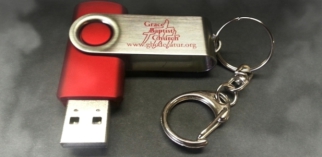
All 75+ series we offer
[reg. $50 ea.] for about $4
Over 2,000 files including sermon manuscripts, PowerPoints and handouts
4 GB drive even gives access to all our future series releases
 Print
Print 