
Microsoft Word document [26.3 KB]

Microsoft Power Point presentation [2.7 MB]
The Truth About the Sabbath
Luke 6:1-5
Let’s talk about the Jewish Sabbath [shabbat]. From sundown Friday to sundown Saturday, is the anchor; the touchstone of Judaism. And what you have in the beginning of chapter 6 is Jesus’ complete disdain for what had become of the observance of the Sabbath. He doesn't say, "You know, it's really nice for you guys that you do that. I certainly applaud your devotion." He shows nothing but disdain for it and this is really hitting them at the very core of their system because, for the most part, self-righteousness and trying to earn your salvation by your works came down to how you observed the regulations of the Sabbath. If you did all the Sabbath stuff, you had earned your righteousness.
Jesus came to speak the truth, and that meant confronting error and sin, regardless of how it might offend. They were wrong about the Sabbath and Jesus was concerned about the truth. You see, what Jesus was doing was forcing people to choose. He didn't come in and say, "You know, we're going to preach the gospel but we're going to get all these various religions together and, you know, you kind of...we all kind of have a lot in common." Jesus came in and said, "Here's the truth, this is the truth, this alone is the truth, everything else is a lie, make your choice. You choose the gospel of Jesus Christ, the gospel of humility, the gospel of repentance, the gospel of grace, the gospel of faith, and not spiritual pride, self-righteousness, and works." That is what Judaism had become and it's what every religion in the world is, except the truth of Christianity. And Jesus was constantly drawing a big, thick line. Choose this or choose that.
And the choice is still the same. If you're going to preach the gospel faithfully, just know it is singular, it is exclusive. It doesn't mingle or mix with anything, as we learned at the end of chapter 5. You can't bring the gospel in like a new piece of garment and sew it into old Judaism. You can't bring the gospel like new wine and put it into the old wineskins of Judaism. You can't mingle the truth with error.
Now the Jews took Sabbath very, very seriously. And the Sabbath day had become literally a collection point for complex restrictions that had been mounting and mounting as rabbis made regulations and they interpreted them and they were reinterpreted until finally this accumulation of things made it the worst day of the week. It was repressive. It was ridiculously strict. And Jesus wanted to show the difference.
v. 1 Now we are introduced into Jesus' attitude toward the Sabbath. Sabbath means to completely cease. Go to Exodus 20:9 for a moment.
So what is God's Sabbath law? Don't work. That was it. That sounds good, right? Take a day off, refresh your body, refresh your spirit, refresh your relationships in the family, enjoy the creation, go out and see what God has made. Do whatever you want, just don't work. This is a day of restoration, of recreation. That's all God ever said about it; just rest.
And by the way, although God rested from His creation on the seventh day in Genesis, He didn't command man to do that until the law of Moses. And seventh day rest was one of the Ten Commandments. It was ceremonial, rather than moral and thus it is not repeated in the New Testament because it wasn't a part of moral law. But it was just a general gift from God to Israel and I think it's a very wise thing in general, beyond even the nation Israel, although God didn't require it before and doesn't require it in the New Testament. Take a day off, enjoy. And in the development of Sabbath they began to use it as a day to worship. But then their religion became so external, and so hypocritical and so superficial that they began to look for ways that they could earn their salvation with God by filling that day with all kinds of rules and regulations that if you kept you would please God and earn salvation--none of which are biblical.
It became the most painful day of the week. People hated it. It was a day of tremendous restriction. Here’s some examples:
You could travel no more than 3,000 feet from home. Unless on Friday before the Sabbath you had planted food at the 3,000-foot point and then you could go 3,000 more because you’d constituted that point as a part of your home because your food was there. Now if you lived down a long, narrow street and you might have been a few hundred feet down from the end of the street or the end of the alley, you could take a piece of wood and put it across the end of the street or alley or you could take a piece of rope and put it across the end of the alley, or you could take a piece of wire and string it across the end of the alley and that would, in the eyes of God, turn it into a doorway and you could consider that the front door of your house so you could go another 3,000 feet from there.
You could lift up something from a public place and put it into a private place or from a private place and put it into a public place. You could lift up things from a wide place and put them into a narrow place. You couldn't carry anything on your person that weighed more than a dried fig. But you could carry half a fig two times on the Sabbath.
There were all kinds of food forbidden on the Sabbath. You couldn't eat any forbidden food larger than an olive. And if you put an olive in your mouth and spit it out because it was bad, the Talmud [book of Jewish law and tradition] said you couldn't replace it with a good one because your palate had tasted the flavor of the first one. Now remember, your salvation depends on this. This is how the people thought. You're pleasing God.
If you threw an object in the air, you could catch it with this hand that you threw it with, but if you caught it with the other hand, it was sin because there's more work involved.
If you were in one place and your arm stretched to reach for food and the Sabbath overtook you, you had to drop the food rather than bring back your arm or you had carried a burden and sinned. A tailor couldn't carry his needle. A scribe couldn't carry his pen. A pupil couldn't carry his books. You couldn't even examine your clothes before you put them on, lest in the examining, meaning kind of brushing and shaking, you killed an insect. Wool couldn't be dyed. Nothing could be sold or bought or washed. A letter could not be sent even with a heathen. No fire could be lit. No fire could be put out. Cold water could be poured on warm, but warm couldn't be poured on cold. An egg couldn't be boiled even if you buried it in the hot sand, which is how they would boil an egg in the desert. You couldn't take a bath for fear that the water would flow off of you and wash the floor. You couldn't move a chair since it might make a rut and that would be too much like plowing. Women could not look in a mirror or put on any jewelry. And if she were to find a white hair, she had to resist the temptation to pull it out.
When it came to grain and food, the laws are just staggering. You could have no more grain than a lamb's mouth full. That's the max amount you could pick. You couldn't leave a radish in the salt because it would make a pickle. The laws go on endlessly about wine, about honey, about milk, about spitting, about getting dirt off your clothes. You could have enough ink to write two Hebrew letters. You could carry enough wax to fill a small hole somewhere. You could stick a wad in your ear if you had an earache, but you couldn't put on false teeth. And this is how it goes, twenty-four chapters of the talmud.
Now what kind of a day is that? This is supposed to be rest and you can't even sort out the stuff you have to not do. Jesus said this to the Jews in Matthew 11. He said, "Come unto Me all you that labor and are heavy laden." This was an oppressive life. "And I will give you rest. Take My yoke and learn of Me, for My yoke is easy and My burden is light.”
It still hangs around today in modern Israel. You see it in America, New York City, for example, they eat only leftover food and drink day-old coffee because they can't prepare anything. The apartment buildings in New York City and other cities have what they call a Sabbath elevator that has no buttons on it. It just goes up, hits every floor and goes down and hits every floor so that you don't have to push a button. That's work. And they have Sabbath timers in the houses that turn the lights on and turn the lights off on the Sabbath because they can't start a fire or turn one out. This is ridiculous. But this is the heart of their religion. The Sabbath is the staple of their system.
v. 1 The grain was ripe, which probably means it was spring or summer. God had addressed this scenario…
Deuteronomy 23:25 When thou comest into the standing corn of thy neighbor, then thou mayest pluck the ears with thine hand; but thou shalt not move a sickle unto thy neighbor's standing corn.
You can't go over and harvest his crop and haul it off. This was corn, but would also apply to a field of grain. But when you're walking through his field, if you're hungry you can pop off whatever you can get in your hand. You can rub it together and when you rub it together it takes the outside shell off and you can blow away the chaff and what you have is the grain and you can get some nourishment. You can do that. God's law provided for a wonderful way in which the people of Israel could enjoy the blessing of the land without owning the crop. And that's exactly what the disciples were doing. They were doing what God had provided them to do.
Verse 2: "But certain of the Pharisees." What? Where did they come from? Well somewhere inside 3,000 feet from their home, unless they were doing a tag-team deal. They are always around and they're dogging the steps of Jesus and they're looking for any way that they can indict Him and discredit Him. Some of the Pharisees said, "Why do You do what is not lawful on the Sabbath?"
Now let me ask you a question. Did the Sabbath law of Exodus 20 say anything about this? Absolutely nothing, it just said "Enjoy your day off, worship the Lord, honor Him, make it holy to Him, enjoy Him and enjoy the day and rest." It didn't say anything about this. Oh, but they had this system and there they were with their constant scrutiny looking for any way to get rid of Jesus. This is very serious stuff and according to the Talmud it says, "In case a woman rolls wheat, rolls it to remove the husks, it is sifting and if she rubs the heads of wheat, it is threshing, and if she cleans off the shell it is sifting, and if she bruisesthe ear, it is grinding. And if she throws it in her hand, it is winnowing. You can't do that on the Sabbath. And the rabbis said that reaping and grinding grain can only be done to something the size of one dried fig or less. Anymore produces guilt. The real question of the Pharisees is, "Why do You have such utter disdain for our religion? You know we're here."
And as always, Jesus' response is perfect in vv. 3-4.
There's a bit of sarcasm there, exposing their ignorance. They were great at knowing the story but not the meaning.
Back in the 24th chapter of Leviticus verses 5 to 9, one of the things that God wanted in the tabernacle was a golden table with the showbread. God said, "Every Sabbath bring in twelve loaves of hot bread and line them up in two rows of six on the table before the Lord, symbolic of the fact that you know that God is the source of your bread, that God is your provider. And you need to do that every week, as a continual recognition that God is your bread provider."
And, according to Leviticus 24, the old bread that comes off can be eaten only by the priests because it has been consecrated to God, so it can't just be treated like common bread, can't be sold or just given to any common person because it has special consecrated significance. Only the priests can eat it.
Now you say, "Who wants seven-day-old bread anyway?" Well, this is that kind of flat bread and without preservatives it becomes a cracker in a dry climate and it's edible.
Well in 1 Samuel 21, the first six verses, David is being chased by Saul. David has been the anointed king. He's going to replace Saul. Saul wants to kill him, right? You know the story.
And he goes to the tabernacle. And there's a priest there. His name is Ahimelech. V. 6: "The priest gave him consecrated bread."
The point is this, mercy and compassion is far more important than ceremony, far more important than ritual. Frankly, that was an indictment of the whole system of Judaism. The whole Sabbath system was oppressive, merciless, void of compassion, grace, kindness. As we shall see in the next passage, they get irritated at Jesus because He healed somebody on the Sabbath. It was like the Sabbath was supposed to be the most painful day of the week. They missed the whole point.
And then Jesus dropped the bomb. At this point He could have said, "Oh, I'm sorry we offended you guys, please forgive us." He didn't.
Verse 5: Guys, you aren't in charge of the Sabbath, I am. I'm in charge of it. I would love to see the expression on their faces.
He's the great interpreter of God's Word. You can never ever understand the Old Testament law without the New Testament interpretation of that law by Christ and the apostles who wrote the words that Christ wanted them to write to interpret the truth.
Mark tells us that He also said, "Man was not made for the Sabbath, but the Sabbath was made for man." The point being, you weren't designed to somehow conform to some impossible rules, but rather the day was made for you for your benefit, for your blessing, for your joy, for your fulfillment, for your rest and for mercy and for compassion and for doing good. He could have reminded them of Micah 6:8, "What does God require of You but to do justly, to love mercy, to walk humbly with your God." They didn't have any of that; no kindness, no mercy, no compassion.
Jesus indicts them in Matthew 23:4 in that real diatribe against the leaders when He...He says about them that they bind on people burdens impossible to bear, and they give them no help in carrying them. The legalists knew nothing about grace. The Lord offered only grace. They knew nothing about humility. He came only to the humble.
And so, of necessity, if we speak the truth, we escalate the conflict with error. But for the sake of the glory of God and the eternal souls of men, we speak the truth.
Book is free with purchase of our Flash Drive, below
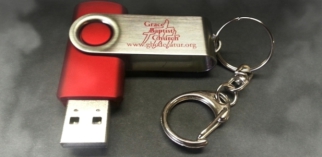
All 75+ series we offer
[reg. $50 ea.] for about $4
Over 2,000 files including sermon manuscripts, PowerPoints and handouts
4 GB drive even gives access to all our future series releases
 Print
Print 